
From the sapphire fields of Ratnapura to the hillside mines of the interior — every gem has a story written in colour, crystal, and centuries of geology. Here is yours to discover.
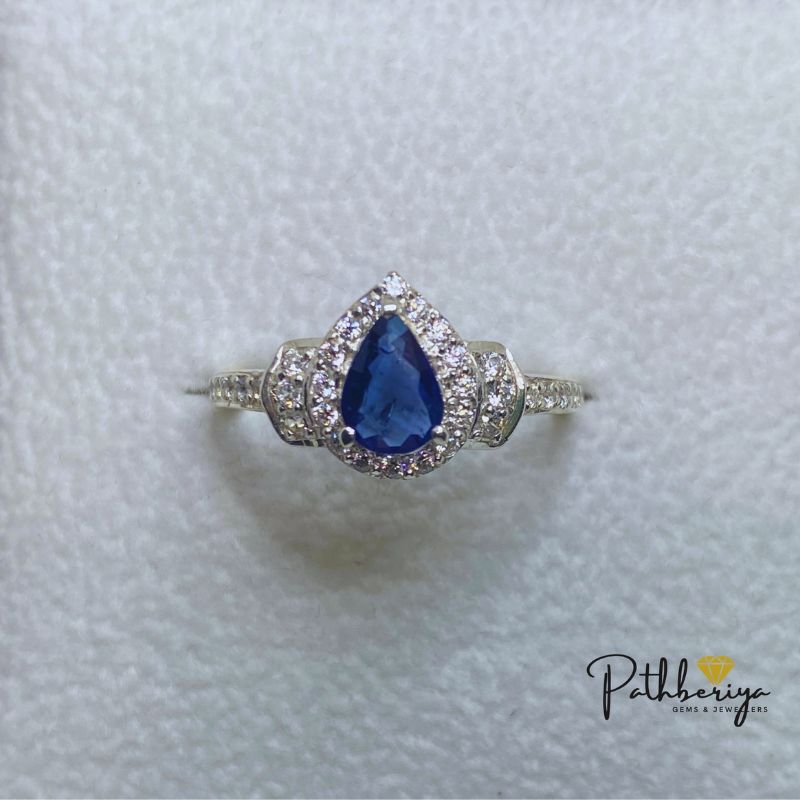
The blue sapphire is Sri Lanka's most celebrated gemstone — and for good reason. The island's sapphires, known worldwide as "Ceylon Sapphires," are prized for their vivid cornflower blue hue and exceptional clarity. For centuries, royalty and collectors have sought them above all others.
Sri Lanka's unique geology produces sapphires across a spectrum from pale sky blue to deep royal blue. The finest specimens carry a pure, vibrant blue without grey or green undertones — a quality known as "cornflower blue" that commands the highest values in international markets.
At Pathberiya, our blue sapphires are set in S925 sterling silver using pear, oval, and round cuts — each chosen to maximise the stone's natural brilliance and colour depth.
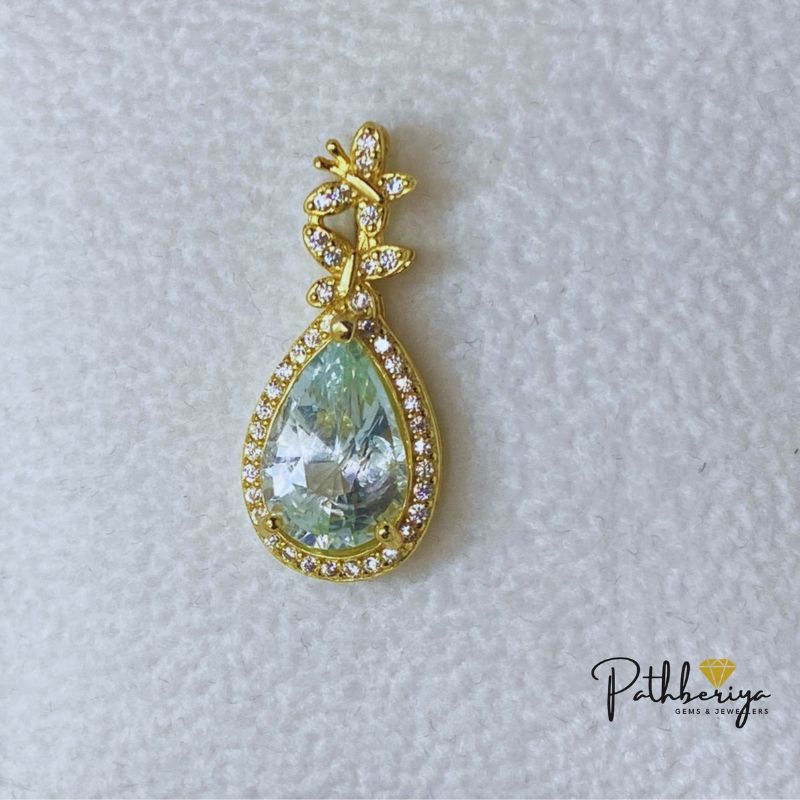
Named from the Latin for "sea water," aquamarine captures the serene clarity of the ocean in crystal form. Its blue-green palette ranges from the palest morning sky to the depths of a tropical sea — each shade utterly captivating.
Aquamarine belongs to the beryl family, sharing its lineage with emerald. Sri Lankan aquamarines are valued for their exceptional clarity — the stone is naturally nearly inclusion-free, giving it a glass-like transparency that makes it perfect for larger, statement cuts.
We carry aquamarine in pear, oval, and round cuts — predominantly set in gold-plated S925 silver to complement the stone's cool, ocean-inspired palette.
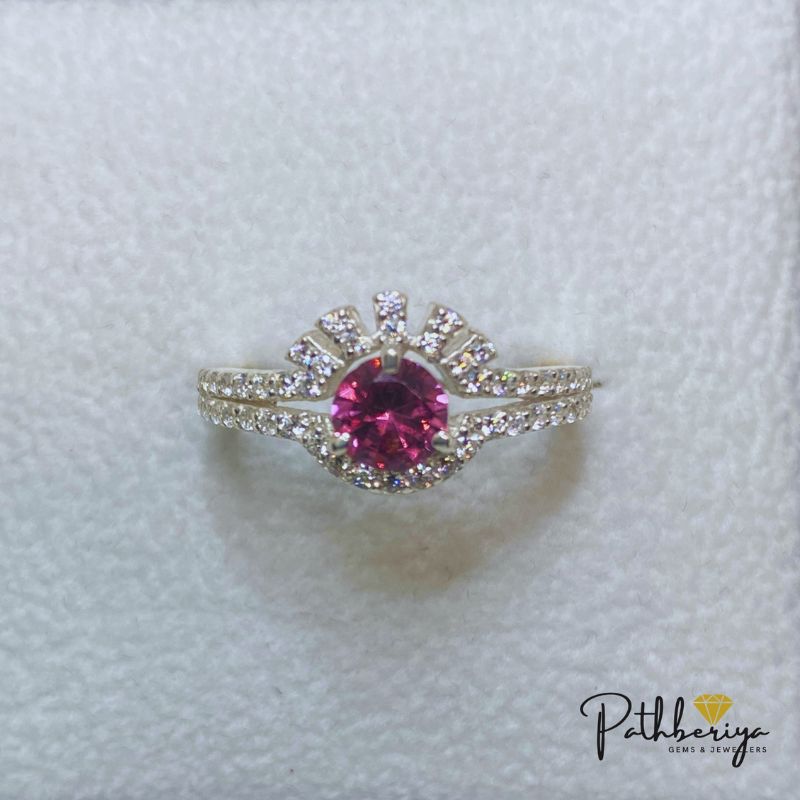
Garnet's deep, passionate red has made it one of humanity's most beloved gemstones for over 5,000 years. Named after the pomegranate seed it so closely resembles, garnet radiates warmth and intensity in a way few stones can match.
Sri Lanka produces some of the world's finest rhodolite and almandine garnets — deep red stones with remarkable lustre and fire. The high refractive index of garnet gives it an exceptional brilliance, making it appear almost lit from within.
Our garnet pieces are set in S925 sterling silver, allowing the stone's rich colour to be the centrepiece without distraction.
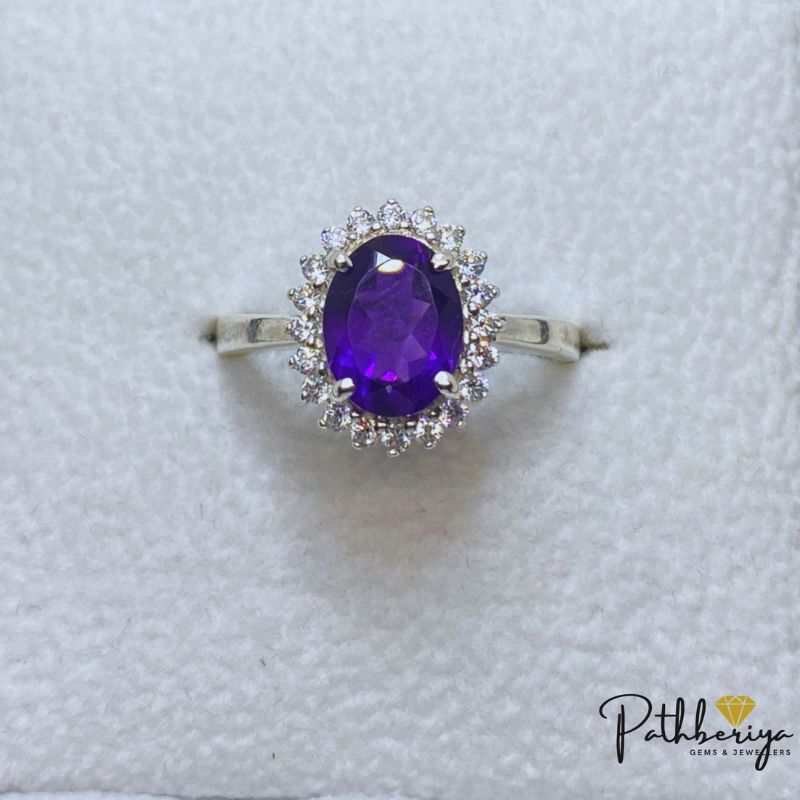
Amethyst has been a symbol of royalty, spirituality, and sophistication since ancient times. Its violet hues — ranging from delicate lilac to deep imperial purple — carry an inherent elegance that has adorned crowns, altars, and jewels across civilisations.
As the most prized variety of quartz, amethyst is valued for the saturation and uniformity of its colour. Sri Lanka produces amethysts with particularly rich violet tones and good clarity, making them excellent for the floral and halo settings we favour.
Our amethyst pieces are set in S925 sterling silver, a pairing that allows the stone's violet depth to command full attention.
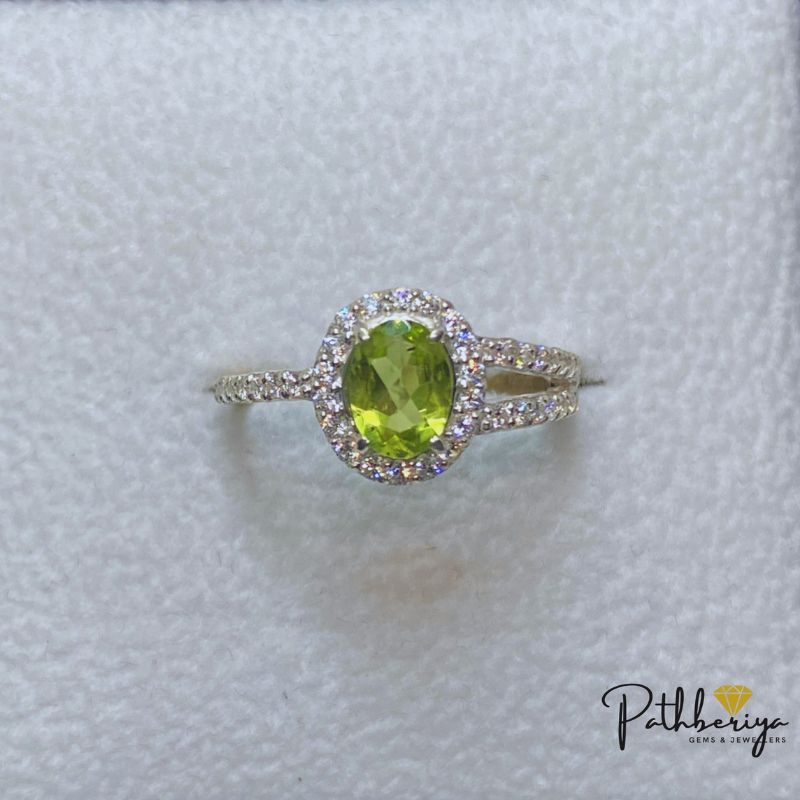
Known in antiquity as "the evening emerald" because its colour remains vivid even in artificial light, peridot is one of the few gemstones that exists in only one colour — an olive to lime green caused by the presence of iron in its crystal structure.
Unlike most gems that form in the Earth's crust, peridot forms deep in the mantle and is brought to the surface through volcanic activity. This unusual origin gives it a geological story unlike any other stone in our collection.
Sri Lankan peridots carry a particularly vibrant, clear green with excellent lustre — a refreshing, natural tone that pairs beautifully with our silver settings.
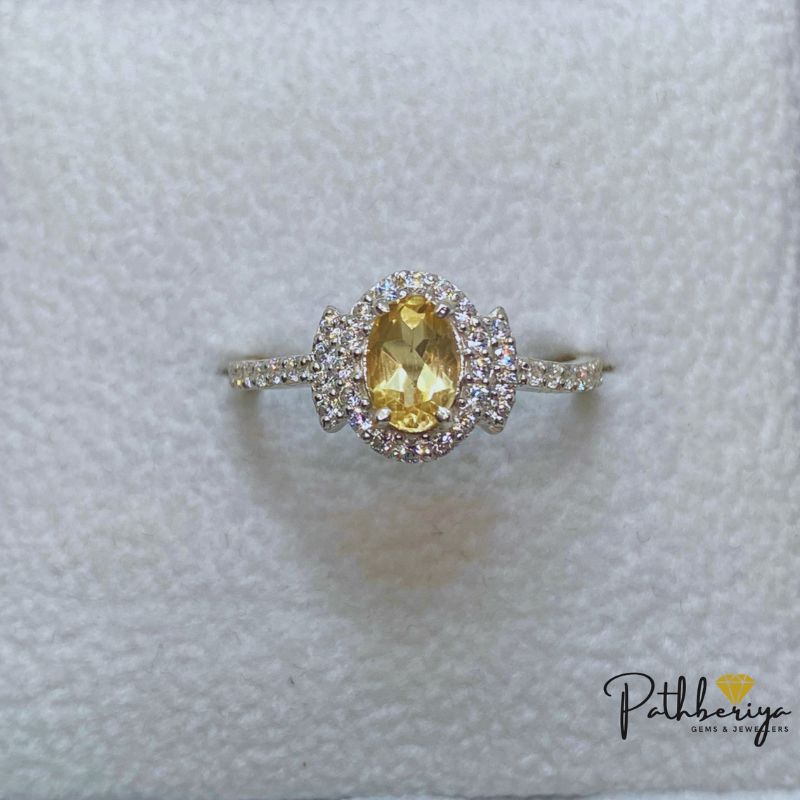
Citrine takes its name from the French word for lemon — citron. Its warm yellow to amber tones carry the energy of sunlight, making it one of the most uplifting and immediately joyful of all gemstones. Historically known as the "merchant's stone," it was believed to attract prosperity and success.
Natural citrine is rarer than many people realise — much of what is sold globally is heat-treated amethyst. Sri Lanka produces genuinely natural citrines with warm, golden hues and excellent clarity.
Set in our S925 silver settings, citrine pairs beautifully with the gold tones of our metalwork — creating a warm, cohesive aesthetic that is unmistakably Pathberiya.
The quality of a coloured gemstone is assessed across four key characteristics — understanding them helps you make an informed, confident choice.
The most important factor. Assessed on hue (the type of colour), tone (light to dark), and saturation (dull to vivid). The finest stones have a pure, vibrant hue with medium to medium-dark tone and strong saturation — without grey or brown modifiers.
Refers to the presence of inclusions (internal features) and blemishes (surface features). Unlike diamonds, coloured stones are assessed by eye — "eye-clean" means no inclusions visible to the naked eye. Some inclusions are acceptable and expected in natural stones.
A well-cut stone maximises colour, brilliance, and weight retention. Coloured stones are often cut to preserve carat weight or enhance colour — not for mathematical precision as in diamonds. Common cuts include oval, pear, round, and cushion.
Carat is a unit of weight — 1 carat equals 0.2 grams. Larger stones are rarer and more valuable per carat. However, a 1ct stone with exceptional colour and clarity can far outvalue a 3ct stone of poor quality. Weight alone does not define value.
With proper care, your Pathberiya pieces will retain their beauty for generations.
Store each piece in its own soft pouch or compartment. Gems can scratch each other — sapphire (hardness 9) will scratch softer stones like citrine (hardness 7) if stored together.
Clean with a soft, lint-free cloth after each wear. For deeper cleaning, use lukewarm water with a tiny drop of mild dish soap and a very soft brush. Rinse thoroughly and dry immediately.
Remove jewellery before swimming, bathing, exercising, or household chores. Chlorine, salt water, and cleaning chemicals can damage both the stone and the silver setting over time.
Put your jewellery on last — after perfume, hairspray, and lotion have dried. These products can dull the surface of gemstones and accelerate tarnishing of the silver setting.
S925 sterling silver can tarnish over time — this is natural. Polish gently with a silver polishing cloth to restore shine. For gold-plated pieces, avoid abrasive cloths that may wear the plating.
Have your pieces professionally inspected once a year. A jeweller can check prong security, re-plate gold-plated items, and deep-clean stones safely. Prevention is always better than repair.
Browse our full collection of authenticated Sri Lankan gemstone jewellery — each piece carrying the knowledge and heritage you've just discovered.
Explore the Collection